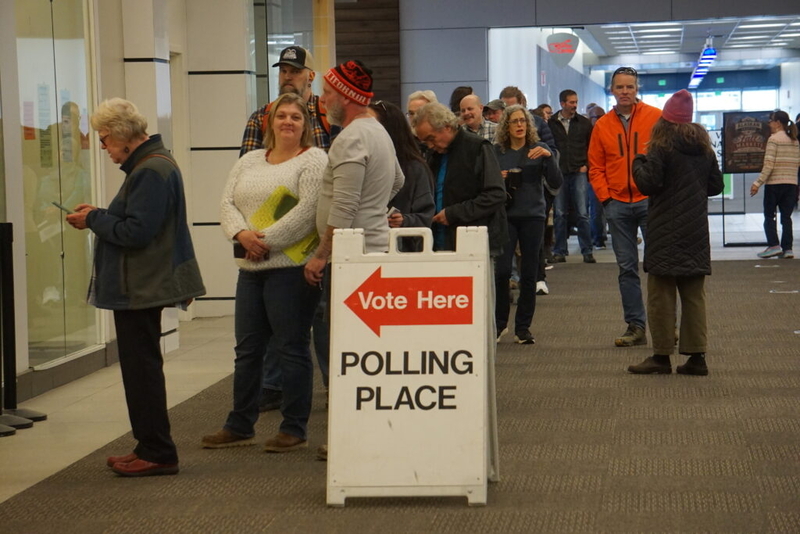
Welcome to The Fair Wind Gazette. As the standoff over federal election mandates moves back to the trial courts, today's edition tracks the latest rulings alongside breakthrough paleoclimate findings on ocean carbon sinks, congressional pushes to limit executive power, and ecological shifts across coastal wetlands.
Yesterday we covered the Nature Climate Change study documenting the abrupt salinification of Antarctic Intermediate Water. Additional details from the research team—spanning the University of Southampton, University of Melbourne, and Indian Institute of Science—highlight that the altered layer sits between 2,300 and 4,000 feet deep. The team analyzed 4,000 robotic Argo floats alongside satellite data from 2004 to 2024, confirming that a sharp drop in Antarctic sea ice since 2016 reduced surface meltwater, increasing the AAIW's density and depth.
Why it matters
The Southern Ocean serves as the principal engine for global oceanic heat and carbon sequestration, with intermediate waters transporting thermal energy toward the equator. Demonstrating that sea-ice loss can alter subsurface ocean layers in under a decade overturns long-standing paleoclimate baselines that assumed these deep reservoirs shifted only over centuries. Climate models that treat intermediate water salinity as static risk underestimating deep-ocean warming rates and global ocean circulation responses.
A study published Thursday in Nature Communications by B. B. Cael and colleagues shows that thermal sensitivity differences between autotrophic and heterotrophic plankton caused a 20 ppm atmospheric CO2 drawdown during the Last Glacial Maximum. Using Earth System Models and the Metabolic Theory of Ecology, researchers demonstrated that cold ocean waters suppress heterotrophic respiration more sharply than autotrophic photosynthesis, causing excess organic carbon to sink into the ocean interior at a rate of 6.2 ppm per degree of surface cooling.
Why it matters
This study isolates a fundamental biological mechanism that links ocean surface cooling directly to carbon sequestration without requiring changes in net marine primary productivity or nutrient supply. By quantifying this marine biological feedback, scientists can resolve long-standing discrepancies in paleoclimate carbon budgets during glacial cycles. These findings provide a refined benchmark for calibrating Earth system models to evaluate long-term carbon cycle stability.
Federal District Judge Denise Casper issued a permanent injunction on Thursday blocking the administration's executive order that sought to mandate proof of citizenship for federal voter registration forms and alter mail-in ballot acceptance windows. The court found that the executive branch failed to provide empirical evidence of noncitizen voting and exceeded its statutory authority under the Elections Clause and National Voter Registration Act.
Why it matters
This permanent injunction reinforces statutory limits on presidential power, confirming that federal election registration standards cannot be altered by executive decree without congressional authorization. By establishing that administrative mandates lacking factual backing cannot override statutory protections, the federal bench has protected state-level election operations from unilateral executive changes.
A meta-analysis published Thursday in the Egyptian Journal of Biological Pest Control synthesized 31 international studies evaluating biological controls against the invasive fall armyworm (Spodoptera frugiperda). Researchers confirmed that entomopathogenic fungi such as Beauveria bassiana and Metarhizium anisopliae, along with entomopathogenic nematodes and beneficial parasitoids like Telenomus remus, significantly reduce pest populations in controlled settings, though field performance requires local environmental calibration.
Why it matters
Invasive agricultural pests are developing heightened resistance to synthetic chemical sprays, particularly as warmer temperatures accelerate insect metabolic rates. Utilizing biological control agents provides home horticulturists and agricultural managers with empirical protocols for integrated pest management that avoid chemical runoff. Establishing localized application guidelines for beneficial fungi and soil nematodes restores ecological balance while preserving crop yields.
An industry review released Wednesday by major UK horticultural institutions—including RHS Garden Wisley and the Eden Project—examined plant mortality and soil responses following five severe summer heatwaves in 2026. The report documented a 40% toll on young nursery treescapes and widespread failure in shallow-rooted trees like beech, while deep-rooted, drought-tolerant species like agapanthus thrived under targeted drip irrigation and rainwater harvest systems.
Why it matters
Shifting climate baselines are altering traditional growing zones, forcing experienced gardeners and land managers to reconsider long-standing plant palettes. The empirical data highlights the necessity of replacing water-intensive, shallow-rooted ornamentals with diverse, climate-resilient species and investing in soil organic matter to retain soil moisture.
Ahead of the November 1 start of the 13th Route du Rhum in Saint-Malo, Ocean Fifty skipper Thibaut Vauchel-Camus publicly called for regulatory caps on carbon-fiber construction waste in high-performance ocean racing on Thursday. Highlighting new IMOCA class rules targeting a 15% reduction in lifecycle environmental impact, sailors and shipyards are testing natural fiber textiles and bio-sourced resins to build competitive offshore racing hulls.
Why it matters
High-performance bluewater sailing relies heavily on carbon-intensive composites that generate significant manufacturing waste and cannot be easily recycled. By enacting class-level environmental standards, grand-prix sailing classes are driving material science innovations in bio-resins and flax composites. These structural developments will eventually trickle down to production cruising yachts, offering long-distance sailors stronger, more sustainable vessel choices.
California state agencies and project partners hosted a public review on Thursday, October 29, presenting updated plans as the Topanga Lagoon Restoration Project reached its 90 percent design threshold. The project aims to expand the severely degraded coastal wetland from less than 1 acre back toward its historic 30-acre extent, incorporating a living shoreline, improved Pacific Coast Highway bridge hydraulics, and restored intertidal habitat within Topanga State Park.
Why it matters
Southern California has lost over 90 percent of its historic coastal wetlands, eliminating crucial stopover sites for migratory shorebirds and waterfowl along the Pacific Flyway. Reconstructing Topanga Lagoon restores intertidal mudflats and freshwater estuarine mixing zones required by species like the endangered tidewater goby and western snowy plover.
Field birders documented a rare Yellow-browed Warbler near Moss Beach on Thursday, marking only the second confirmed record of this Siberian species in the Lower 48 states. The bird, which typically breeds in boreal forests across northern Asia and winters in Southeast Asia, drifted more than 5,000 miles off course due to atmospheric wind patterns along the Pacific Rim.
Why it matters
Documenting extreme vagrancy along the California coast provides field ornithologists with valuable empirical data on avian navigational errors and atmospheric displacement during autumn migration. Such rare sightings highlight how seasonal wind patterns interact with the Pacific Flyway, offering birders unique opportunities to observe trans-Pacific vagrants in coastal willow habitats.
Archaeologists Diane and Arlen Chase published updated excavation findings on Wednesday from the ancient Maya city of Caracol in Belize, including a 1,700-year-old royal tomb attributed to ruler Te K'ab Chaak. Combining ground excavations with LiDAR remote sensing, researchers revealed miles of continuous agricultural terracing, complex reservoir systems, and prosperous middle-class neighborhood burials.
Why it matters
These archaeological discoveries challenge long-held historical theories that pre-Columbian Maya society consisted merely of isolated ceremonial hubs surrounded by impoverished rural populations facing environmental collapse. Demonstrating that Caracol maintained extensive terraced infrastructure and a broad middle class reveals sophisticated, long-term urban planning and resource stewardship.
Following the 9th Circuit's rejection of the Department of Justice's emergency request earlier this week—where the appellate panel criticized the government's attempt to bypass lower courts—U.S. District Judge David Carter denied the DOJ's motion on Thursday for a temporary restraining order. The DOJ sought to compel California registrars to segregate mail-in ballots from alleged noncitizens based on federal database matches. Judge Carter ruled that the executive branch's invocation of the Supremacy Clause did not override state election administration autonomy, finding that imposing the federal mandate days before the election would create administrative chaos and risk disenfranchising eligible voters.
Why it matters
The ruling maintains established constitutional federalism principles that grant primary authority over election logistics to the states. By citing the Purcell principle regarding last-minute judicial intervention in voting procedures, the district court blocked executive attempt to bypass local verification processes. The decision sets an important precedent regarding the limits of federal agency oversight over state voter rolls ahead of the midterms.
Building on the GAO findings we tracked yesterday regarding the administration's 'pocket rescissions,' congressional leaders announced on Thursday a legislative agenda aimed at curbing unilateral executive power. Proposals include statutory amendments strictly enforcing the Impoundment Control Act to prevent unauthorized withholding of appropriated funds, alongside the No Pardon Paydays Act to require transparency surrounding presidential pardons, and statutory protections shielding career civil servants from politically motivated dismissals.
Why it matters
This legislative package represents a direct effort to restore statutory guardrails around presidential authority and re-establish congressional primacy over spending and oversight. By targeting pardon transparency, impoundment abuses, and civil service independence, the proposed measures address constitutional vulnerabilities exposed by aggressive executive actions.
A report published Thursday in the UK highlights a growing movement among studio woodworkers, architectural historians, and furniture makers re-evaluating traditional hand-tool crafts. Advocates from organizations like Slow Ways Studio and We Are Makers argue that traditional timber joinery and rush weaving represent functional material intelligence and sustainable design, rather than mere historic nostalgia, while pressing for institutional support to address economic precarity among independent craftspeople.
Why it matters
Preserving specialized hand-tool joinery and local timber sourcing knowledge is vital for maintaining high standards of fine woodworking and sustainable material use. Reframing craft as material intelligence encourages workshop practitioners to integrate traditional hand techniques into contemporary studio practice, ensuring the intergenerational transfer of physical woodworking expertise.
Subsurface Marine Shifts Reveal Rapid Climate System Feedbacks Data from robotic Argo floats and metabolic plankton models demonstrate that oceanic intermediate water layers and biological pumps respond far more dynamically to temperature and meltwater fluctuations than long-term linear models predicted.
Judicial Bench Reasserts Constitutional Boundaries on Election Administration Federal courts across multiple jurisdictions are rejecting executive branch attempts to unilaterally alter state voting rules and force ballot segregation, enforcing statutory limits and federalist separation of powers.
Ecological Adaptations Reshape Agricultural and Horticultural Practices Faced with escalating pest resilience and unprecedented summer heatwaves, growers are pivoting away from calendar-scheduled chemical spraying toward targeted biological controls and climate-responsive plant diversification.
Material Intelligence Reclaims Traditional Craftsmanship in Modern Design Advocates and studio artisans are elevating hand joinery, timber sourcing, and traditional material knowledge as essential structural solutions against mass production precarity.
Offshore Racing Marine Rules Drive Sustainable Composite Innovation Regulators and ocean racing skippers ahead of major regattas are establishing mandatory environmental impact caps that accelerate the transition from petrochemical carbon fibers to bio-resins and natural textiles.
What to Expect
2026-10-29—UN negotiations open in New York to consider binding high-seas bottom trawling phase-out by 2027.
2026-11-01—Start of the 13th edition of the Route du Rhum solo transatlantic sailing race from Saint-Malo.
2026-11-06—4th Lantau Yacht Club Boat Show opens featuring regional and international superyachts.
How We Built This Briefing
Every story, researched.
Every story verified across multiple sources before publication.
🔍
Scanned
Across multiple search engines and news databases
355
📖
Read in full
Every article opened, read, and evaluated
106
⭐
Published today
Ranked by importance and verified across sources
12
— The Fair Wind Gazette
🎙 Listen as a podcast
Subscribe in your favorite podcast app to get each new briefing delivered automatically as audio.
Apple Podcasts
Library tab → ••• menu → Follow a Show by URL → paste